
What is a “Rotator Cuff”?
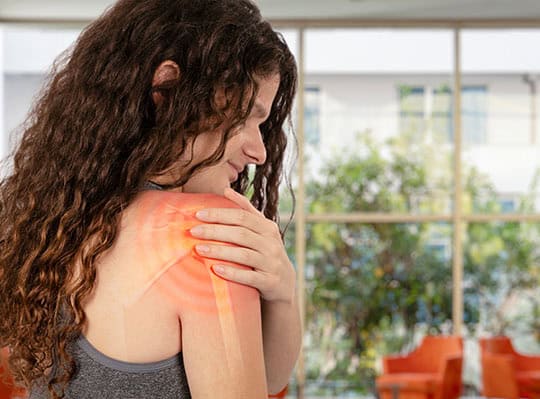
The group of muscles that surround the shoulder that attaches the upper arm bone (humerus) to the shoulder blade (scapula). These muscles are important in shoulder movements. The tendon can become irritated, damaged, or completely torn causing pain and dysfunction.
What Causes Rotator Cuff Damage?
- Rotator cuff injuries occur most often in people who repeatedly perform overhead motions in their jobs or sports. Examples include painters, carpenters, and people who play baseball, volleyball or tennis.
- A fall or traumatic injury. In these circumstances, medical care should be provided as soon as possible.
- The risk of the rotator cuff tearing also increases with age.
Cause of Rotator Cuff Pain:
- Tendinopathy/ Tendinosis: this refers to chronic changes that occur in the rotator cuff tendons. Activity of the rotator cuff with tendinopathy results in pain.
- Partial thickness tear: this refers to tendon damage that does not create a full hole in the tendon.
- Full thickness tear: this refers to tendon damage that goes through the entire thickness of the tendon.
Other causes of pain:
- Shoulder Bursitis (fluid-filled sac that provides a cushion between a bone and tissues)
- Calcific Tendonitis
- Bicipital Tenosynovitis
Rotator Cuff Symptoms:
- Shoulder pain that is worse when reaching overhead or behind your back
- Weakness or difficulty lifting objects
- Limited movement/range of motion of your shoulder
- Night pain and difficulty sleeping due to increased pain
What we do at Acumen for Rotator Cuff Pain?
- A thorough evaluation and history of the shoulder pain will be performed.
- Typically, an x-ray is needed to evaluate bony abnormalities
- An ultrasound may be performed to identify the type of damage.
- Depending on severity an MRI may be suggested to further examine the tear and the extent of the damage.
Treatment Options:
- Tendinopathy/ partial thickness tear: For these conditions, surgery is often not required. Proper therapy is often helpful for patients to get relief and progress.
- Full thickness tear: Tears through the full thickness of the rotator cuff are at higher risk of increasing in size. Treatment with appropriate rehabilitation or surgery can help improve symptoms and pain in these tears. If full thickness tears happen after an injury, such as a fall, there may be an advantage to earlier treatment.